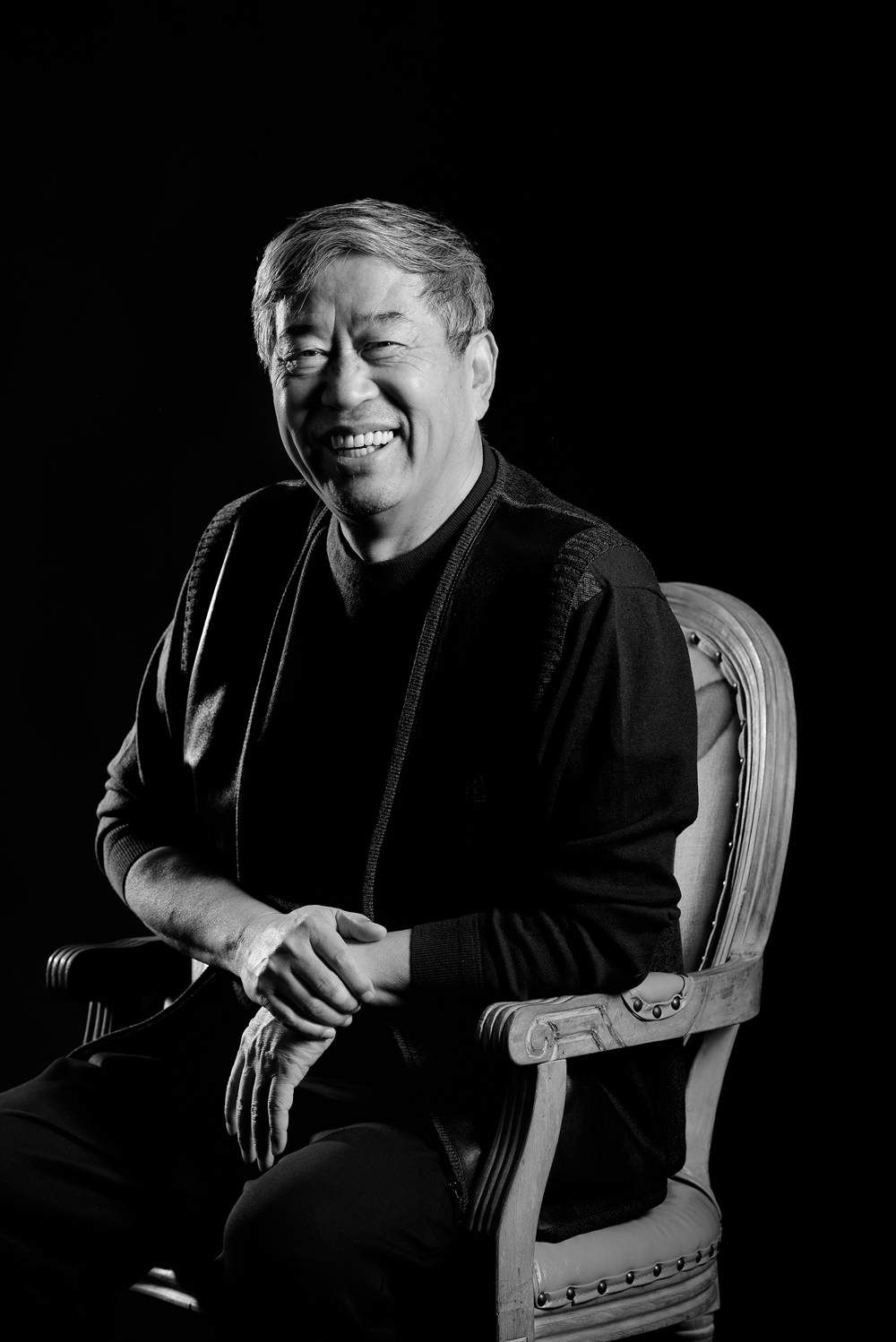
Yu Maoyang (Jianweng)
Former Party Secretary and Professor, Shandong University of Art & Design; Supervisor of Calligraphy Postgraduates
Biography
Mr. Yu Maoyang, also known by the pen name Jianweng, is a native of Dong'e, Shandong. He was born in Dong'e, Shandong, in March 1955 and later settled in Jinan. He served as Party Secretary and a professor at Shandong University of Art & Design, as well as a graduate supervisor in calligraphy, and the esteemed teacher of Mr. Shi Haibin.
In discussing calligraphy, he advocated 'honoring the ancient without slighting the present'—there is no divide between mainstream and non-mainstream in calligraphy; whatever the general public consider beautiful, the creative innovations of all kinds of writers should be affirmed.
In discussing art, he stressed that 'brush and ink should follow the times': one must not complain about being born out of one's time, but rather consider how to integrate with new materials and new environments, and seek new paths of survival.
In discussing education, he stressed that 'calligraphic culture is built upon the foundation of sharpened skills'—to one-sidedly emphasize cultural accumulation while neglecting the tempering of skill, and to think that good characters can be written on cultivation alone, is the true extreme. He also said that society in the future needs versatile talents with one specialty and many abilities, and that calligraphy can serve as the core, connecting outward to diverse media such as woodblock printing, ceramics, and modern design.
'There is no technique in being a person—only sincerity, genuineness, kindness, and love. I love calligraphy; every gesture and every stroke in writing reflects my principles and feelings as a person.' — Yu Maoyang (Jianweng)
Chronology
In March 1955, born in Dong'e, Shandong.
In September 1975, entered the Chinese Department of the Liaocheng Branch of Shandong Teachers College; in August 1978, graduated and stayed on at the college to work.
In 1981, elected a council member of the Shandong Calligraphers Association.
In September 1990, appointed head of the Art Department of Liaocheng Teachers College (until September 1996).
In November 1991, visited Japan with a Chinese youth delegation.
In 1995, established a calligraphy education program at Liaocheng Teachers College and began enrolling students.
In 1998, the History of Chinese Calligraphy in the Twentieth Century, which he led in compiling, was published by Henan Fine Arts Publishing House; the same year he was appointed professor of calligraphy at Liaocheng Teachers College.
In January 2003, transferred to Shandong University of Art & Design.
In 2004, established a new calligraphy program open to nationwide enrollment; in September, appointed professor by the Institute of Oriental Art of Renmin University of China; the same year, elected chairman of the Shandong Colleges and Universities Calligraphers Association.
From 2005 to 2017, served as vice chairman of the fourth and fifth Shandong Calligraphers Association.
From 2006 to 2017, served as a member of the Education Committee of the fourth and fifth China Calligraphers Association.
In 2010, established 'Yu Maoyang' calligraphy scholarships at Liaocheng University and Shandong University of Art & Design respectively.
In 2011, attended the Ninth National Congress of Literature and Art.
In October 2013, elected chairman of the Shandong Education (System) Calligraphers Association; the same year, donated A Hundred-Meter Scroll of Li Bai's Poems in Calligraphy by Yu Maoyang to Shandong University of Art & Design.
In September 2014, held a solo calligraphy exhibition and a works seminar at the Shandong Art Museum; at the same time, Inscriptions on the Walls of Post Stations: A Collection of Yu Maoyang's Calligraphy Works was published by Shandong Fine Arts Publishing House; from that year to 2017, served as a member of the Shandong Provincial Committee of the Chinese People's Political Consultative Conference.
In October 2015, retired. After retirement, he held solo calligraphy exhibitions such as A Wisp of Pale Cloud, A Few Strands of Coolness, A Tree of Cold Branches, and Several Autumn Leaves.
In 2017, appointed advisor to the sixth Shandong Calligraphers Association.
On August 20, 2023, the Yu Maoyang Calligraphy Museum in Gaotang County opened.
In 2026, Liaocheng University established the Exhibition Hall of Yu Maoyang's Donated Calligraphy Works.
Educational Approach
Mr. Yu Maoyang is a pioneer of professional calligraphy education in China’s modern universities, the first to establish a teacher-training program in calligraphy education and the first to create a specialization in decorative calligraphic art. He advocated honoring the ancient without slighting the present, giving equal weight to calligraphy's aesthetic value and its contemporary practical value. In teaching, he took 'one specialty, many abilities, and learning applied to use' as his guiding principle; building on a solid foundation of traditional brush and ink, he broke down the boundaries between calligraphy, craftsmanship, and design, guiding calligraphy into modern life and cultivating artistic talents who possess both cultural grounding and practical ability.
Bringing Calligraphy into Teacher Education
In 1995, he founded the calligraphy education program at Liaocheng University, building a complete training chain from undergraduate to master's to doctoral level, establishing a stable pathway for primary and secondary school calligraphy teachers, and advancing calligraphy education from folk master-disciple transmission toward standardized higher-discipline education.
Founding the Calligraphy Decorative Arts Track
In 2003, he established the decorative calligraphic art program at Shandong University of Art & Design, treating calligraphy as visual material rather than mere desk-bound creation, and connecting it with ceramics, woodblock printing, bronze art, spatial decoration, and digital media, thereby providing a model for the 'calligraphy + design' approach to education.
A Foundation First, Then Art
His requirement of students was: first acquire the skills to make a living, then consider the possibilities of artistic development. In the first two years, they solidified their foundation in stele and model calligraphy and in brush and ink; in the last two years, they branched into workshops for materials, craftsmanship, and design. Graduation works need not be only hanging scrolls of xuan paper—they could also be ceramic carving, woodblock printing, installations, or spatial calligraphy.
Usefulness Keeps It Alive
Calligraphy was originally the everyday writing of the ancients, combining both aesthetic and practical qualities; it should not decline into a niche craft meant only for refined appreciation in exhibition halls. He advocated that 'brush and ink should follow the times,' actively adapting to new materials, new spaces, and new media; at the same time, he emphasized that technical foundation is the root and cultural cultivation is the superstructure, and that neither may be neglected.
In His Own Words
There is no technique in being a person—only sincerity, genuineness, kindness, and love. I love calligraphy; every gesture and every stroke in writing reflects my principles and feelings as a person.
Honoring the ancient without slighting the present. There is no divide between mainstream and non-mainstream in calligraphy; whatever the general public consider beautiful, the creative innovations of all kinds of writers should be affirmed.
Calligraphy is a historical symbol of Chinese civilization and a carrier of China’s fine culture. Writing was originally a tool for communicating information, not a refined art detached from production and life; we must value the practical and aesthetic dimensions of calligraphy, striving to be beneficial and useful.
Brush and ink should follow the times, and the development of calligraphy must keep pace with the era. We must not complain about being born out of our time, but consider how calligraphy can integrate with new materials and new environments, and seek new paths of survival.
Calligraphic culture is built upon the foundation of sharpened skills. To one-sidedly emphasize cultural accumulation while neglecting the tempering of skill, and to think that good characters can be written on cultivation alone, is the true extreme.
Our requirement of students is: first acquire the skills to make a living, then consider the possibilities of artistic development.
Society in the future needs versatile talents with one specialty and many abilities; merely writing characters alone makes it hard to gain a foothold in society. Calligraphy can serve as the core, connecting outward to diverse media such as woodblock printing, ceramics, and modern design.
The popularization of art is the general trend; society needs the public to possess artistic cultivation, but not everyone needs to become a professional artist.
At the end of the ink road. (His wife jokingly called him this, and he applied it to himself as well: absorbed in brush and ink, never changing his resolve.)
Writing is a poetic expression of cultural emotion.